
Period Tips I Wish I Knew in My 20s for PCOS & Painful Periods

If you're dealing with PCOS or just painful periods that leave you debilitated every month, I need you to know that this is NOT normal, and you don't have to live like this.
I'm talking from experience here. I used to have only like three cycles a year, but when I did get my period finally, I was completely knocked out. I would literally call my mom from school saying I was "sick" because I didn't want anyone to know it was my period. She'd come pick me up because I would actually be throwing up and couldn't function.
My mom told me painful periods would prepare me for childbirth. And you know what? She wasn't totally wrong because with my first kiddo, it wasn't until I was past six centimeters dilated that my contraction pain actually matched my period cramp pain. That’s how bad it was!
I spent over 10 years dealing with irregular cycles and debilitating painful periods. It wasn't until my mid-20s that I finally figured out what was going on. I finally learned that painful periods are not, in fact, preparing you for anything. They're a red flag from your body that something is off.
And no, the solution wasn't just drinking milk thistle tea or taking a random supplement. For me, I had to dig pretty deep. But I got there. And now, I've helped hundreds of women get there too.
So if you're dealing with PCOS or painful period symptoms that are taking over your life, let's talk about what's actually going on in your body and what you can start doing today to feel better.
This post may contain affiliate links, which means I may receive a small commission at no extra cost to you if you choose to make a purchase through the links. I only recommend products I truly love and trust. Thank you for supporting my work!
Why Do You Have Such Painful Periods?
Period cramps fall into two categories: primary dysmenorrhea and secondary dysmenorrhea.
Primary dysmenorrhea is when your period cramps are caused by excess prostaglandins. Women with painful periods have been shown to have FOUR TIMES! the amount of prostaglandins as women without painful periods (and yes those women really exist!). Think of prostaglandins like inflammation in the body, but overloaded.
We need some inflammation, for example, if you cut your hand, you want inflammation to help it heal. But when you have four times the amount you should have? That's when you get those debilitating cramps.
Secondary dysmenorrhea is when period cramps are caused by things like endometriosis, cysts on your ovaries (hello, PCOS), or even the copper IUD. If you have a copper IUD and that's what's causing your painful periods, the solution is pretty straightforward—get rid of the copper IUD. I know that seems obvious, but sometimes we need to hear it from a friend.
What we're focusing on today is primary dysmenorrhea, but these tips will still support secondary dysmenorrhea too, especially if you're dealing with endometriosis or PCOS.
Four Simple Things You Can Start Doing Today
If you're someone who's been dealing with PCOS and painful period symptoms and you don't know where to start, here are the four things I wish I would have known back in the day.
Increase Your Omega-3s (Especially from Fatty Fish)
One thing that's actually been proven to lower prostaglandins is omega-3, specifically omega-3 from fish. Now, I'm very cautious about fish oil supplements because so often they're high in heavy metals or they're rancid by the time you get them from the store.
So I always recommend starting with actual food instead of a supplement if you can. What this looks like is the week before your period, focus on getting more fatty fish into your regular meals. Think salmon, sardines, mackerel. These are all great sources of omega-3s that can help lower that inflammation and reduce your painful PMS symptoms.
If you do want to bring in a supplement, I actually prefer a food-based option. I opt for EnergyBits, which is an algae brand that has spirulina and chlorella tabs that are super easy to take. I recommend the Chlorella Recoverybits, which has very high amounts of omega-3 and that's actually where salmon gets it from. These come in big bags with about a thousand tablets, and you only need to take about five a day (or 10 if you want to high dose).
Use discount code LEAHB to save 20% on EnergyBits.
Chlorella is also great for gut support, so you're getting double benefits here. But please, start with your food first. Add some salmon to your plate before you go reaching for supplements.
Balance Your Blood Sugar
I talk about this one until the cows come home for a reason. Even as a non-diabetic, you need to be manually balancing your blood sugar.
You might be thinking, "But why? My body is supposed to bring down spikes on its own."
Yes, it is. But if you're constantly spiking your blood sugar throughout the day, that's causing inflammation in your body. And we already talked about how excess inflammation contributes to those painful periods.
Every time your blood sugar spikes, your pancreas is working overtime, your cortisol levels are responding, your insulin levels are jumping, and your liver is storing and releasing glycogen. All of these systems are constantly working to keep you balanced. When you manually balance your blood sugar and take some of that load off, it's going to make such a massive difference in reducing your painful period symptoms.
So how do you balance your blood sugar?
Focus on two things: fiber and protein.
Think of your plate like this: half your plate should be non-starchy veggies, then a quarter protein, and a quarter fat and carb.
Non-starchy veggies are your fiber. Think of fiber like a broom that sweeps out your gut. It's helpful for elimination, it feeds your gut microbiome and supports good bacteria, and it helps slow the absorption of carbs in your body. So as you eat carbs (which you should, to support ovulation and your thyroid), the fiber helps prevent a sharp spike.
Non-starchy veggies include cruciferous vegetables, green beans, leafy greens, peppers, and carrots. You can also add lower glycemic carbs like beans, lentils, and berries. These double as fiber but they're also filling your carb category without impacting blood sugar as much.
Protein is going to nourish you, help you build muscle, support your blood sugar, boost your immune system, and support brain health.
Just start with one meal. Maybe you start with breakfast and focus on increasing your protein and fiber. I promise that you will notice a big difference in how you feel, especially if you are someone who is currently drinking coffee and calling that breakfast.
Support Your Liver
When we're thinking about reducing inflammation and supporting hormones, liver support is huge. Liver support means anything that's going to help stimulate bile flow. Bitter herbs are really great for this. And if you’re not sure what that means, leafy greens double as bitter herbs, so you're already getting some liver support if you're following that blood sugar balancing plate I just mentioned!
Other great liver supports include milk thistle, dandelion, and vitamin C. You know how people say "drink lemon water in the morning and it'll change your life"? I don't know if it'll change your WHOLE life, but lemon water is high in vitamin C, and vitamin C is something we need for both our liver and our adrenals. So there's definitely a benefit there.
I love making teas and infusions with milk thistle and dandelion. These are simple, inexpensive ways to support your liver naturally.
Castor oil packs are another option. You just place them over your liver to help stimulate bile flow and support detoxification. These are great additions to your routine.
If you do want to bring in a supplement for liver support, bitters are great and they help with digestion too. You can also do a milk thistle supplement.
But again, before you jump down the rabbit hole of supplements, please start with food! I always recommend starting there and seeing how your body responds before deciding on any supplements.
Bring in Magnesium
This is the one supplement I actually would recommend bringing in right away.
Over 78% of women in the US are deficient in magnesium. And magnesium is your relaxation mineral. If you're cramping, you have tight muscles. So it makes sense that you would need magnesium to help those muscles relax.
There are many types of magnesium, but if I'm going specifically for hormonal imbalances, PCOS, painful period support, I'm opting for glycinate, bisglycinate, or malate forms of magnesium.
If you’re new to taking magnesium, I typically see people get it and take one capsule, which is usually 100 milligrams. But you’re usually going to need closer to 300 to 500 milligrams to start seeing a difference.
A general guideline is to take at least three times your body weight in milligrams of magnesium. But that's not medical advice, and you may want to test with something like a Hair Tissue Mineral Analysis before you bring in that type of dosage.
I know it can be tricky figuring out which magnesium to buy and making sure you're getting third-party tested supplements. I have a list of my favorite magnesium brands on Fullscript, which is a professional-grade supplement dispensary. Think of it like Amazon for supplements, but safe.
As a sidenote, NEVER buy your supplements from Amazon. I'm looking at you. Don't do it. They're typically not stored at the correct temperature, so they don't have the potency you need. It's also way too easy for them to be counterfeit, so you're paying all this money and not even getting what you paid for. You might even be getting something dangerous.
Fullscript is temperature-controlled and your supplements even arrive through the mail with ice packs if they need to stay cool, so you know for a fact you're getting what you pay for.
Create a free account on Fullscript for my recommended magnesium supplements.
Start with these 4 shifts to get rid of your PCOS & painful periods:
Omega-3s
Blood sugar balance
Liver support
Magnesium
These 4 things are exactly what I wish I would have done back in the day. They would have helped me so much with my debilitating periods and probably with the hormonal acne I had all over my forehead and jawline too.
If you're dealing with horrible, painful period symptoms and you start implementing these changes, you're going to notice a difference. But I want to be honest with you too, because if you've been dealing with this for years like I was, it might take more than just these foundational pieces.
Sometimes you need personalized support to start seeing results faster. You need testing to see what's actually going on in your body instead of guessing. You need someone to look at your specific situation and say, "This is what we're focusing on. Implement this, and then we'll stack on the next thing." And then you need accountability to follow through on the protocol that’s going to change your life and symptoms for good.
This is exactly what we do inside the Hormone Reset Program®. We have over 600 women who have gone through this program and seen incredible results, like painless periods, regular cycles, improved fertility, weight loss, and so much more.
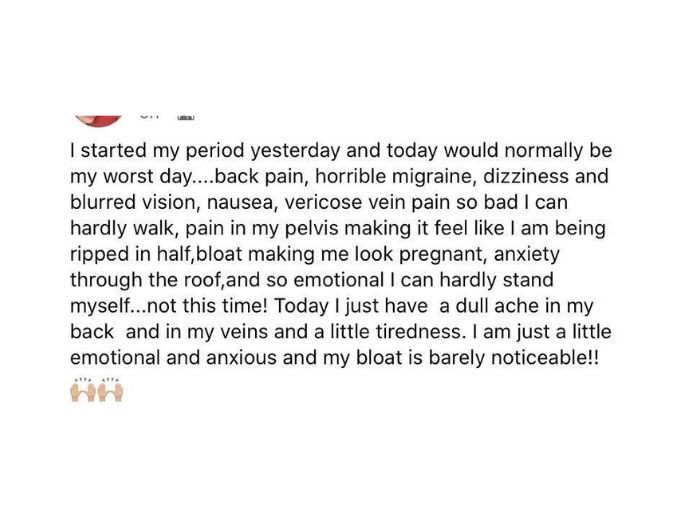
One of my clients came to me in exactly this situation.
She used to dread day two of her period—migraines, back pain so severe she could barely walk, bloating that made her look pregnant, and debilitating anxiety.
After working together, here's what she shared during her most recent cycle!
If you're tired of dealing with PCOS and painful periods that are controlling your life and you're ready to have a proven plan instead of just throwing things at the wall and hoping they stick, I'd love to support you.
You don't have to keep suffering through painful periods. I got to the other side and I know you can too.
Book your free call with my team for an inside look at the Hormone Reset Program®. She'll walk you through what it's really like to get support, answer your questions honestly, and help you see whether this is the right step.